6226f7cbe59e99a90b5cef6f94f966fd Best May 2026
Safe, unlimited, and free VPN service. Change your IP address with free VPN
 DOWNLOAD NOW
Safe, unlimited, and free VPN service. Change your IP address with free VPN
DOWNLOAD NOW
Secure, unlimited, and free VPN service. Change your IP addresss with a free VPN.
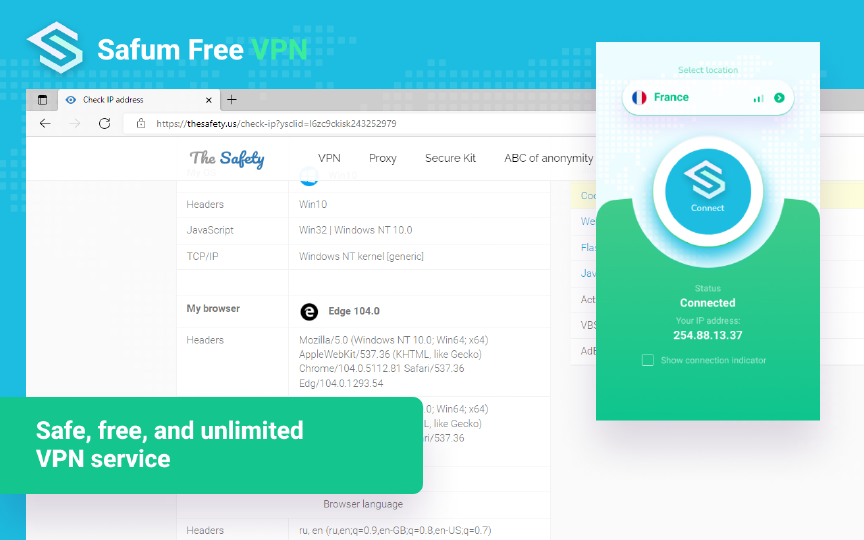
The Safum Free VPN service allows you to change your IP address.
You can unblock geo-restricted websites and gain access to blocked websites.
Features:
 DOWNLOAD NOW
Download and install the extension using the button below.
Steps:
Select a country and click the “Connect” button.
If some country doesn’t work - switch to another one.
With our VPN service, you can access blocked sites. Just download and activate the service and surf websites without restrictions.
Free. No trial. No registration. No ads. Unlimited. No session, speed or bandwidth restrictions.
There are many countries in the VPN service that the user can connect to.

Safum Free VPN for Chrome is available in Chrome Web Store

Safum Free VPN for Edge is available in the Edge Add-ons marketplace.
I should consider possible sources where such a hash might be used. Academic databases like arXiv, ResearchGate, or IEEE Xplore usually don't use hashes for identifiers; they use DOIs or arXiv IDs. Maybe the user is confusing hashes with other types of identifiers. Alternatively, a blockchain or a digital signature system might use hashes, but that's less likely for a paper.
I should also mention that sometimes hashes are used for checksums to verify a document's integrity, but without the original source, the hash alone isn't enough. They should check if they have any other references or metadata related to this hash. 6226f7cbe59e99a90b5cef6f94f966fd
Possible next steps for the user: if they have the original document, they can verify the hash to confirm it's the correct one. If not, perhaps they can search using other methods, like keywords from the document content, if available. I should consider possible sources where such a
First, I need to confirm if this hash corresponds to an actual document. I should check if there's a known paper with this hash. Perhaps the user is trying to cite a paper but only has the hash, or maybe it's a typo. Alternatively, they might have generated a hash for a paper they wrote and need help retrieving the original document. Alternatively, a blockchain or a digital signature system
I should also check if the hash is from a well-known paper. For example, sometimes papers are hashed for integrity checks, but I don't think there's an index that maps hashes back to papers. The user might need to reverse the hash, but SHA-256 is a cryptographic hash function, so without the original document, it's practically impossible to reverse-engineer.
I should also think about possible errors. Could "6226f7cbe59e99a90b5cef6f94f966fd" have a typo? Let me count the characters: 6226f... it's 32 characters, which is correct for SHA-256. So that's a SHA-256 hash. Without the original document, I can't retrieve the paper from the hash alone.