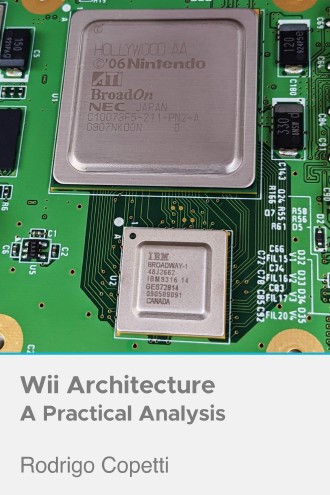
This article is also published in many bookstores for the benefit of offline readers. The eBooks are DRM-free, while the printed editions compile multiple articles and feature original photography at full resolution.
You can find printed compilations here, and individual eBooks at Amazon Kindle, Apple Books, Kobo and other stores. The proceeds support the improvement of current articles and the development of new ones.
Filmywap started as a whisper on message boards and in the comment sections of fan blogs: a place where films, songs, and shows could be downloaded for free. For many, it was a light in the dark—an easy portal to the latest releases, the rare regional movie no streaming service carried, or the soundtrack that hadn’t been released in their country. In emerging markets where official streaming subscriptions were costly or unavailable, Filmywap and sites like it filled a gap. They offered immediate access to culture, communal fandom, and a sense that media belonged to everyone, not just those who could pay.
That appeal came with contradictions. The same convenience that democratized access also eroded the economic ecosystem that supports filmmakers, composers, and distribution crews. For independent creators scraping together budgets and for technicians whose livelihoods depended on licensing, every unauthorized copy meant a tangible loss. Legal studios and rights holders framed sites like Filmywap as theft, pointing to decreased box-office receipts and smaller budgets for future projects. Users, meanwhile, rationalized downloads as harmless: a single viewer could not sink a blockbuster. Both positions contained truth, and the tension between them exposed deeper questions about value, ownership, and global inequality. filmywap
Responses to Filmywap-style platforms varied. Rights holders invested in stricter enforcement, technological protections, and legal pressure. Simultaneously, new legitimate services sought to undercut the site’s appeal by offering affordable, regionally tailored catalogs and removing friction from discovery and payment. Governments weighed enforcement against public sentiment; creators advocated stronger protection and fairer revenue distribution. The debate pushed innovation: more flexible licensing, ad-supported free tiers, and microtransaction models emerged as market attempts to reconcile access with compensation. Filmywap started as a whisper on message boards
Filmywap’s evolution traces the wider story of the internet’s cultural economy. In its early phase it was messy and decentralized—mirror sites, torrents, and shifting domains that kept it just out of reach of enforcement. Each takedown spawned a new iteration; each prosecution stirred debates about digital rights and jurisdiction. When a blockbuster leaked and a pirated copy circulated before premiere night, studios scrambled to anticipate and control narratives, while passionate communities shared subtitled versions, edits, and fan-made reworks that further complicated the ethical picture. They offered immediate access to culture, communal fandom,
The narrative of Filmywap is therefore not binary but layered. It is a story about unmet demand and ingenuity; about moral gray zones where cultural participation clashes with economic rights; about law trying to keep up with technology; and about a global audience asserting a claim to stories in an age when distribution no longer respects borders. It’s also a cautionary tale: when access is solved by appropriation rather than invention, the result can be a short-term gain that undermines the cultural production systems we rely on.
Contributing
This article is part of the Architecture of Consoles series. If you found it interesting then please consider donating. Your contribution will be used to fund the purchase of tools and resources that will help me to improve the quality of existing articles and upcoming ones.
You can also buy the book editions in English. I treat profits as donations.
A list of desirable tools and latest acquisitions for this article are tracked in here:
### Interesting hardware to get (ordered by priority)

- Nothing else, unless you got something in mind worth checking out

### Acquired tools used

- Cheap Wii with accessories (£15)
This work is licensed under a Creative Commons Attribution 4.0 International License. You may use it for your work at no cost, even for commercial purposes. But you have to respect the license and reference the article properly. Please take a look at the following guidelines and permissions:
Article information and referencing
For any referencing style, you can use the following information:
Title of article: Wii Architecture - A Practical Analysis
I only ask that you at least state the author’s name, the title of the article and the URL of the article, using any style of choice.
You don’t have to include all the information in the same place if it’s not feasible. For instance, if you use the article’s imagery in a Youtube video, you may state either the author’s name or URL of the article at the bottom of the image, and then include the complete reference in the video description. In other words, for any resource used from this website, let your viewers know where it originates from.
This is a very nice example because the channel shows this website directly and their viewers know where to find it. In fact, I was so impressed with their content and commentary that I gave them an interview 🙂.
Appreciated additions
If this article has significantly contributed to your work, I would appreciate it if you could dedicate an acknowledgement section, just like I do with the people and communities that helped me.
This is of course optional and beyond the requirements of the CC license, but I think it’s a nice detail that makes us, the random authors on the net, feel part of something bigger.
Third-party publishing
If you are interested in publishing this article on a third-party website, please .
If you have translated an article and wish to publish it on a third-party website, I tend to be open about it, but please .
bushing and marcan, 25c3: Console hacking 2008: Wii fail (Ben "bushing" Byer, one of the leading people in the Wii hacking scene, sadly passed away in 2016.).
↩︎
Okqubit, Motherboard (I've removed the background).
Changelog
It’s always nice to keep a record of changes. For a complete report, you can check the commit log. Alternatively, here’s a simplified list:
### 2022-12-04
- Corrected ambiguity between Hollywood (the SoC) and its internal GPU. See https://github.com/flipacholas/Architecture-of-consoles/issues/150 and https://github.com/flipacholas/Architecture-of-consoles/issues/151 (thanks @phire, @Pokechu22, @Masamune3210 and @aboood40091)
### 2022-11-23
- Improved anamorphic paragraph (see https://github.com/flipacholas/Architecture-of-consoles/issues/92), thanks @Pokechu22.
### 2022-01-12
- Corrected speed comparison, thanks James Diamond.
### 2021-12-23
- Added Mario model from Super Smash Bros Brawl
### 2021-06-26
- General overhaul
- Improved sources section
### 2020-08-20
- Minor mistakes corrected, thanks @JosJuice_### 2020-07-05
- Added mention of Jazelle and other unused bits of the ARM926EJ-S
### 2020-03-25
- Added Tails models
### 2020-01-06
- Spelling & Grammar corrections
### 2020-01-05
- More accurate references to official documents
- Extended (small) audio section
- Referenced Wiimote's speaker
- Added footer
- Public release
### 2020-01-04
- Second draft done
- hola carlos
### 2019-12-31
- First draft done
Rodrigo Copetti
I hope you have enjoyed this article! If you want to know more about the author tap here and if you would like to support him tap here instead