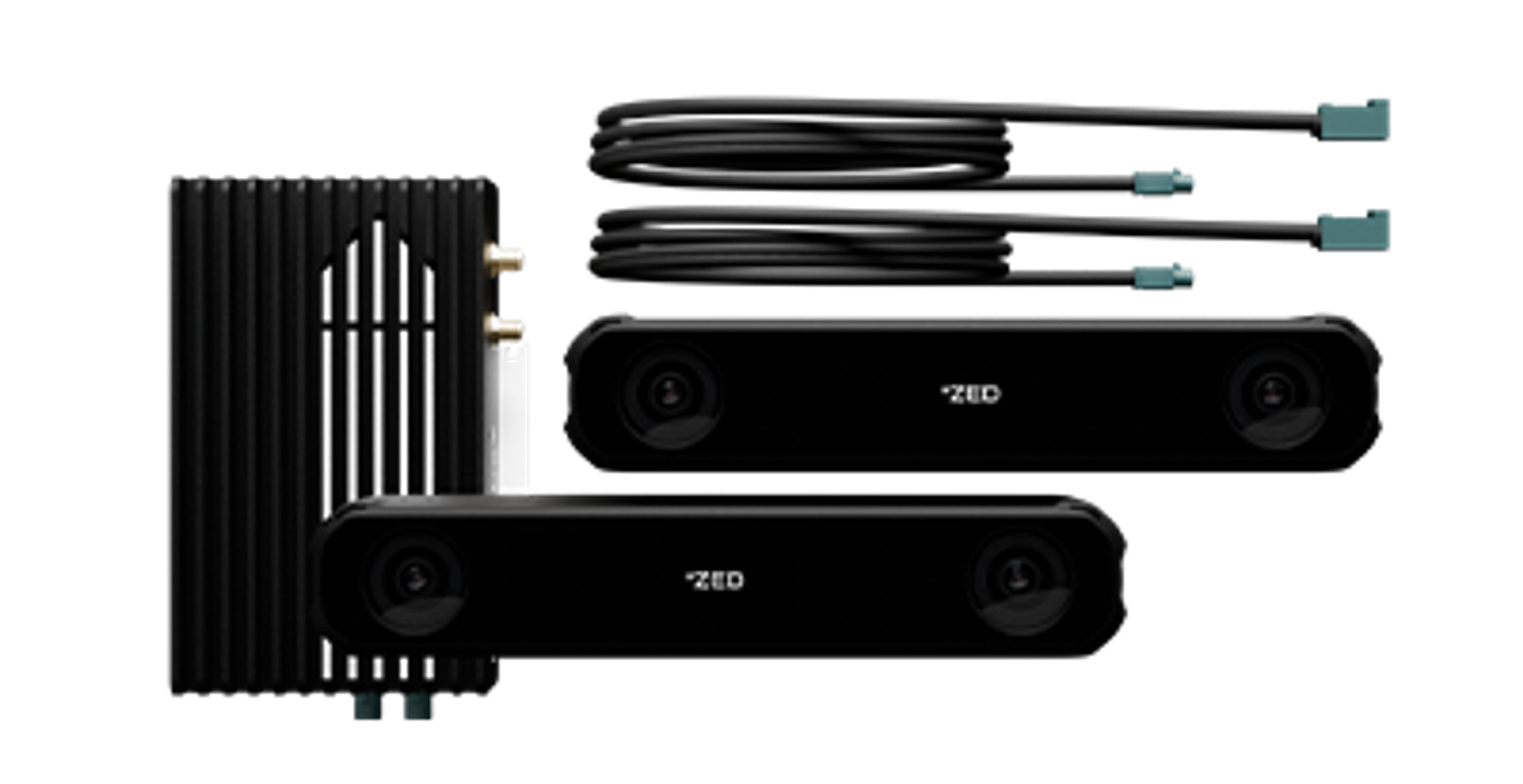
The ZED SDK allows you to add depth, motion sensing and spatial AI to your application. Available as a standalone installer, it includes applications, tools and sample projects with source code.
One-sided passion, by its very nature, is an intense and often unrequited love or admiration. It's a powerful emotion that consumes one's thoughts, fuels dreams, and frequently leads to actions that might otherwise seem irrational or courageous, depending on the perspective of the observer. This kind of passion can drive individuals to excel, to create, and to express themselves in ways they might not have without the stimulus of their feelings.
The bittersweet nature of one-sided passion is that it can inspire greatness but also lead to profound disappointment. Those who have experienced it understand the pain of longing for something or someone that seems unattainable. Yet, it's in these moments of vulnerability that individuals often discover their inner strength, resilience, and capacity for love. one sided passion 1986 okru free
Without a specific reference point for OKRU, one can only speculate on its influence or the nature of its connection to 1986. However, if OKRU represents a community, a musical genre, or an artistic movement, its legacy could be seen in the way it inspired a generation. The one-sided passions of 1986, whether towards a cause, a person, or a dream, would have contributed to the rich tapestry of history, influencing future movements and personal stories. One-sided passion, by its very nature, is an
In the sweltering summer of 1986, amidst the vibrant cultural shifts and the pulsating rhythms of emerging genres, there existed a fervor, a one-sided passion that echoed through the lives of many. This was a year marked by significant events worldwide, from the Chernobyl nuclear disaster to the hands of time clicking forward on the clocks of history. Yet, for many, 1986 was also a year of personal epiphanies, of silent admirations, and unrequited loves. The bittersweet nature of one-sided passion is that
If OKRU refers to a particular cultural movement, music group, or social phenomenon of the time, then 1986 might represent a pivotal moment in its evolution. The '80s were a decade of bold fashion statements, the rise of digital technology, and a growing awareness of global issues. For those involved in or inspired by OKRU, 1986 could have symbolized a peak of creativity, activism, or cultural expression.
The story of one-sided passion in the context of 1986 and OKRU serves as a reminder of the power of human emotion. Whether in love, activism, art, or another pursuit, the intensity of one's beliefs and feelings can shape not only personal destinies but also the course of history. As we reflect on such themes, we're reminded of the importance of empathy, understanding, and the courage to pursue our passions, no matter how one-sided they may seem.
Legacy
For older releases and changelog, see the ZED SDK release archive.
Ouster unveils REV8, the world’s first native-color lidar sensorLearn more
There are currently no items in your bag.
Fixed an OpenGL installation issue on Windows platforms with Python versions 3.12+ when using the script get_python_api.
Fixed a binary compatibility issue between the ZED Python API (pyzed) and numpy that occurred specifically on Windows platforms with Python versions 3.9, 3.10, and 3.11. This fix ensures stable integration and prevents runtime errors related to ABI mismatches in these configurations.
Fixed getVideoSettings(sl::VIDEO_SETTINGS::WHITEBALANCE_AUTO) on ZED-X / ZED-XOne, which was returning an incorrect value at launch (noticeable in ZED Explorer with multiple cameras).
Tools
Added focal length information (in millimeters) in ZED Explorer, within the 'Calibration' window.
Added SVO auto-repair support in ZED Explorer. It will now attempt to auto-repair corrupted SVO files upon opening, similar to ZED Depth Viewer (or SDK).
Fixed ZED Explorer framerate calculator.
Fixed model downloads in ZED Diagnostic tool when GPU is not available.Fixed minor UI issues in ZED Explorer.
Fixed minor UI issues in ZED Media Server.
Fixed video settings control through receiver/host in ZED Media Server. Users can now control virtual ZED-X camera video settings from the receiver side.
Fixed stop signal handling in CLI mode for a proper and clean exit in ZED Media Server.
Added support for different ZED-XOne camera models connected to ZED Media Server (identical resolution is still required).
Added support for multiple JSON configuration files for virtual cameras in CLI mode via the --config option in ZED Media Server.
Wrappers
Improved Python wrapper performance when using multiple cameras in multiple threads.
Improved pip installation behavior in the Python wrapper: now uses --force-reinstall by default to avoid issues with stale pyzed after reinstallation.
Fixed Docker images with OpenGL display; they are now available again.
Fixed minor issues in the C and C# wrappers.
Samples
Improved C++ and Python samples for camera streaming and recording. They are now available and optimized for both single and multi-camera setups.
Bug Fixes
Fixed ZED X auto-recovery function. A regression introduced in 5.0.0 prevented the GMSL camera recovery in case of an interruption.
Fixed a rare crash that could occur when enabling NEURAL depth mode.
Fixed a deadlock in the Object Detection module with the new internal threaded mode introduced in 5.0.0.
Fixed an unclosed file descriptor on Jetson when using SVO H26X input. This could lead to undefined behavior if the Camera class was opened and closed hundreds of times in the same instance processing hardware-decoded SVOs.
Fixed a regression when using multiple GPUs. It now correctly uses the selected device ID.
Fixed multiple bugs in setSVOPosition functions using index or timestamp input. It should now set the expected frame.
Fixed a small memory leak when using Fusion.
Fixed AI model optimization log when using ROS.
Fixed Object Detection crash when passing an invalid or missing custom YOLO-like ONNX file.
Fixed undefined behavior in Object Detection and Body Tracking when processing detector output.
Fixed incorrect retrieveImage output when using specific resolutions. The issue could affect grayscale or low-resolution images.
Fixed isVideoSettingsSupported function with the AEC_AGC_ROI setting that would return invalid results.
Tools
Fixed ZEDfu NEURAL depth mode optimization.
Improved Depth Viewer camera open when switching between camera models.
Improved ZED Explorer firmware update GUI on ZED X for clarity.
Samples
Added support for YOLOv11, YOLOv12, and more when using a custom YOLO-like ONNX model. Check out the dedicated documentation page.
Updated C++ Spatial Mapping sample.
Updated C++ Positional Tracking sample.
Camera Drivers
Added support for Jetson RT Kernel for ZED X camera with dedicated drivers.
Deprecation
Using retrieveObjects and retrieveBodies with runtime parameters is now deprecated. Setting runtime parameters should now be done using the dedicated setters.
Camera::retrieveImage
Camera::retrieveMeasure
Added GPU-optimized functions, blobFromImage, and blobFromImages, for converting images to Deep Learning model tensor inputs.
Added utility functions, Mat::convertColor, for common color conversions, such as swapping red and blue channels and removing the alpha channel.
Added support for Custom OpenCV Calibrations with sl::CameraOne
Updated default Image framerate to 30Fps, it provides the best performance compromise
Updated IMU data rate for ZED X camera to 200Hz instead of 400Hz, it improves stability and performance, especially for multi-camera setups
Updates the default InitParameters::depth_stabilization value set to 30, it provides a more stable depth with minimal motion artifacts
Renamed Camera::retrieveObjects to Camera::retrieveCustomObjects for custom object detection. The default behavior remains unaffected, but the new method is required when using CustomObjectDetectionRuntimeParameters.
Added new parameters to the CustomObjectDetectionProperties struct:
(min|max)_box_(width|height)_meters, to give control to maximum 3D objects dimensions
native_mapped_class, to allow remapping a custom label to the SDK’s internal SUBCLASS and profit the internal tuning
object_acceleration_preset and max_allowed_acceleration to have better control of the tracked objects' maximum acceleration
Bug Fixes
Fixed a potential deadlock in Positional Tracking GEN_2
Fixed the function to retrieve unified point clouds from multiple camera setup within the Fusion API
Fixed a random issue leading to NAN values in IMU orientation.
Fixed the function resetPositionalTracking when using Positional Tracking GEN_2
Fixed a random issue leading to NAN position in Object Tracking
Fixed random memory leak in Fusion when playing back SVO files
Fixed ZED-One UHD 4K SVO recording/playback
Fixed a potential deadlock occurring in Object Detection within the Fusion API
Tools
Improved Diagnostic Tool for GMSL camera. It now exports GMSL stack status on Jetson
Improved ZED Explorer support for ZED One
Improved DepthViewer rendering for smoother display
Added support of ZED-One into Sensor Viewer
Wrappers
Introduced GPU support for the Python API, thanks to GitHub user @Rad-hi. This feature is optional and requires the CuPy package.
Added custom object detection support in Python and C.
Improved Python wrapper performance, there’s now negligible runtime overhead compared to C++
Added compatibility for C# .net8.0 framework
Added Unreal Engine version 5.5 compatibility
Added support for Python 3.13. The legacy Python 3.7 version is now dropped
Samples
Added new custom object detection samples utilizing the read() function for more efficient asynchronous detection.
Platforms
Removed support for legacy Jetpacks 4.6, 5.0, and 5.1 (L4T 32.7, 35.1, and 35.2 respectively)
Added support for TensorRT 10, this version introduced Blackwell GPU support (with CUDA 12.8) but dropped Pascal GPU support. For GTX 10X0 series GPU, TensorRT 8 installers should be used.